

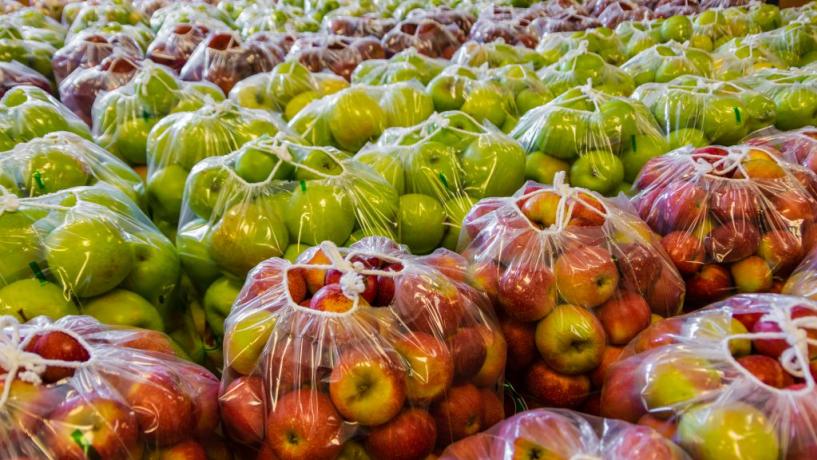
Australia has strict rules about what imported foods are allowed into the country, and this is extremely important in maintaining the country’s high standards of food safety. But do you know how imported food products are deemed safe to enter the country, and by what criteria they are measured?
Mr Stuart Grant, from the Federal Department of Agriculture and Water Resources, spoke recently at a symposium for imports and exports.
Mr Grant, Assistant Director of Australia’s Imported Food section, broke down the reasons for imported food being denied entry into Australia into the following 7 categories:
1. Labelling issues (71.8% of rejected foods)
This accounts for the vast majority of rejected imported foods. According to the Australian New Zealand Food Standards Code (ANZFSC), imported foods must be labelled with importer details, nutrition information, a complete ingredients list, a lot code or origin declaration. Imported foods incorrectly or inadequately labelled will not be accepted into the country.
2. Microbiological issues (8.8%)
These foods have failed testing for microbiological contaminants, including E.coli, Salmonella and Listeria.
3. Food contaminants (7.8%)
These foods have failed testing for other contaminants, the most common being iodine (in seaweed), hydrocyanic acid (in cassava chips), and aflatoxins (in nuts).
4. Composition – label assessment (5.2%)
Assessment of food labels will reveal whether the imported products contain additives or ingredients that are not permitted under the ANZFSC. If they do, these will be rejected.
5. Presence of unsafe chemicals (4.3%)
Foods can be tested upon entry to Australia for dangerous chemical substances, like certain pesticides, fluoroquinolones, and other prohibited chemicals. If traces are found, these products will be rejected.
6. Composition – analytical (1.4%)
Analytical testing of foods can reveal issues with their composition, including the presence of allergens, adulteration or moisture.
7. BSE certificate (0.7%)
A very small amount of imported foods are rejected because they contain beef and are not accompanied by the required Bovine Spongiform Encephalopathy (BSE) certificate, which confirms that the food is compliant with Australia’s BSE policy.
The percentages quoted above are based on 6 months worth of inspections (July–December 2015) by the Australian Department of Agriculture and Water Resources. In fact, the overwhelming majority of inspected foods in this time period were found to be compliant with Australian laws and standards.
For more information on importing foods into Australia, head to the Australian Department of Agriculture and Water Resources website.
|
Reason for Rejection |
What It Involves |
Key Detail |
|
Contamination |
Presence of harmful bacteria or substances |
Includes pathogens or unsafe chemical levels |
|
Incorrect labelling |
Non-compliant or misleading labels |
Must meet Australian food labelling standards |
|
Undeclared allergens |
Missing allergen information |
Poses serious risk to consumers |
|
Biosecurity risks |
Potential introduction of pests/diseases |
Strict controls to protect local agriculture |
|
Non-compliant ingredients |
Use of banned or restricted substances |
Must align with Australian food regulations |