.jpg?width=820&height=462&name=Depositphotos_291518040_XL%20(1).jpg)
In South Australia (SA), all Food Handlers are legally required to have food safety skills and knowledge under Standard 3.2.2A of the Food Standards Code, alongside the state's own Food Safety Act 2001. For businesses, an efficient way to meet this obligation is enrolling staff in a nationally recognised Food Handler course.
Understanding what that training involves, who needs it and how it fits alongside other staff certifications like Responsible Service of Alcohol (RSA) is key to managing compliance effectively. Here's everything SA food business owners and managers need to know.
Who needs to complete a Food Handler course in South Australia?
Under Standard 3.2.2A of the Food Standards Code, any person who handles unpackaged food as part of a food business must have food safety skills and knowledge appropriate to their work activities. In SA, this applies across hospitality, retail and health and community settings - from restaurants and cafés through to delis, caterers and childcare or aged care providers.
As a business owner or manager, you are responsible for ensuring every Food Handler on your team receives food safety training before they begin working with food. This obligation covers permanent staff, casual workers and temporary employees alike.
Why does South Australia require food safety training?
Food-borne illness is a genuine public health risk – across Australia, more than 4.6 million cases of food poisoning are reported each year, leading to over 47,000 hospitalisations. To reduce this risk, SA Health enforces the Food Safety Act 2001 and requires food businesses to comply with Standard 3.2.2A.
SA also runs its own Priority 1–4 (P1–P4) risk classification system, which sits alongside the federal requirements and determines how often a business is inspected. Local councils use this classification, together with SA Health's Food Safety Rating Scheme ("scores on doors"), to monitor compliance and share inspection results with the public. Keeping staff training current and on file helps your business stay ahead of inspection requirements.
What does SA Food Handler training cover?
The Australian Institute of Food Safety (AIFS) delivers an online Food Handler course that covers the core knowledge your staff need to handle food safely and in line with legal requirements, including:
- Safe food handling, storage and preparation
- Recognising and controlling food safety hazards
- Preventing cross-contamination
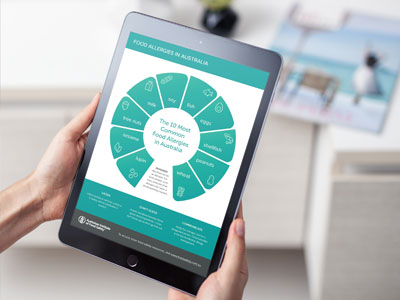
- Food allergies and intolerances
- Personal hygiene standards and safe workplace behaviour
Training is delivered online through AIFS, a Registered Training Organisation (RTO) approved to deliver nationally recognised food safety courses.
Staff can complete the course in a single session or across multiple logins - practical for businesses managing shift rosters or onboarding several new team members at once. Each participant receives a Statement of Attainment upon completion, based on the industry they select at enrolment (Hospitality, Retail or Health & Community), providing formal documentation of their training.
Is RSA required with food handling in SA?
RSA and Food Handler training are separate certifications that cover different legal requirements. If your business serves or supplies alcohol under a liquor licence, your relevant staff will need an RSA Certificate in addition to food safety training. The two certifications are independent of each other and do not substitute for one another.
|
Role |
Food safety training |
RSA certification |
|
Kitchen staff |
Required |
Not required |
|
Wait staff (food only) |
Required |
Not required |
|
Wait staff (serving food and alcohol) |
Required |
Required |
|
Bar staff (no food handling) |
Not required |
Required |
If you are unsure which certifications apply to specific roles in your business, check with SA Health or your local council.
How to get your staff certified with AIFS
- Individuals can enrol online via the AIFS Food Handler course page. Group enrolments are available through an AIFS Business Account.
- Complete the online lessons and quizzes. Staff work through self-paced content and can log in and out as their schedule allows, with 12 months of online access.
- Submit an Observer Report to confirm that staff are able to complete practical tasks (such as hand washing) to a satisfactory standard.
- Receive the Statement of Attainment. Each participant receives formal, nationally recognised documentation upon completion, which Environmental Health Officers often ask to see during inspections.
For a full breakdown of SA-specific food safety obligations, visit the South Australia food safety laws and requirements page.
AIFS delivers nationally recognised Food Handler training that meets the requirements of Standard 3.2.2A and SA food safety laws. For businesses managing ongoing staff training, the online format removes the need to coordinate in-person sessions and keeps compliance records simple.
Ready to get your team trained? Take the next step with the AIFS Food Handler course today.

Frequently Asked Questions
Q. Is food safety training a legal requirement for Food Handlers in SA?
A. Yes. Under Standard 3.2.2A of the Food Standards Code and the Food Safety Act 2001 (SA), all Food Handlers must have food safety skills and knowledge appropriate to their work activities. This applies to all food businesses operating in South Australia.
Q. Can the Food Handler course be completed online in SA?
A. Yes. The AIFS Food Handler course is delivered online and meets SA food safety training requirements. Staff can complete it at their own pace from any device.
Q. How long does the AIFS Food Handler course take?
A. The course can typically be completed in three to four hours, with flexible access so staff can finish training at a pace that suits their schedule.
Q. Does Food Handler training expire in SA?
A. Standard 3.2.2A does not specify a mandatory expiry period, and the Statement of Attainment is valid indefinitely, though businesses are advised to refresh staff knowledge periodically. Check with your local council for any jurisdiction-specific guidance.