
---
title: Could Your Favourite Drinks Be Food Safety Hazards?
description: Planning on having a nice cool soft drink to escape the heat? Or a cocktail or two over the weekend? Be aware of the food safety hazards that lurk within.
image: https://blog.foodsafety.com.au/hubfs/Imported_Blog_Media/Dangerous-Drinks-Is-Your-Favourite-Drink-a-Food-Safety-Hazard-2.jpg
---

# Dangerous Drinks - Is Your Favourite Drink a Food Safety Hazard?

Planning on having a nice cool soft drink to escape the heat? Or a cocktail or two over the weekend? Be aware of the food safety hazards that lurk within.

[![Food Safety Supervisor Course](https://blog.foodsafety.com.au/hubfs/afs/home/AFS%20Sidebar.webp) ](https://www.foodsafety.com.au/courses/food-safety-supervisor?utm_campaign=28973228-AFS%20Blog%20Sidebar%20CTA&utm_source=hubspot&utm_medium=sidebarCTA)

[![Food Safety Supervisor Course](https://blog.foodsafety.com.au/hubfs/afs/home/AFS%20Sidebar.webp) ](https://www.foodsafety.com.au/courses/food-safety-supervisor?utm_campaign=28973228-AFS%20Blog%20Sidebar%20CTA&utm_source=hubspot&utm_medium=sidebarCTA)

[![Food Safety Supervisor Course](https://blog.foodsafety.com.au/hubfs/afs/home/AFS-mobile.webp) ](https://www.foodsafety.com.au/courses/food-safety-supervisor?utm_campaign=28973228-AFS%20Blog%20Sidebar%20CTA&utm_source=hubspot&utm_medium=sidebarCTA)

![Dangerous Drinks - Is Your Favourite Drink a Food Safety Hazard?](https://blog.foodsafety.com.au/hs-fs/hubfs/Imported_Blog_Media/Dangerous-Drinks-Is-Your-Favourite-Drink-a-Food-Safety-Hazard-2.jpg?width=820&height=462&name=Dangerous-Drinks-Is-Your-Favourite-Drink-a-Food-Safety-Hazard-2.jpg)

 January 27, 2018

Planning on having a nice, cool soft drink to ward off the summer heat? Or a cocktail or two over the weekend? Many people don't realise that there may be a food safety hazard lurking in their favourite drink. Here are some of the dangers to look out for.

## Ice

If ice is made from contaminated water, it can release dangerous pathogens into your drink as it begins to melt. What's more, ice can pick up pathogens from cutting boards, hands or ice scoops. In fact, a study in the US found that [between 67% and 83% of the ice cubes](https://theconversation.com/just-in-time-for-your-tailgate-how-getting-a-drink-can-be-dirty-business-83073) that were sampled in restaurants carried bacteria or fungi on them.

Many people know when travelling overseas to developing countries that they should avoid ice in drinks, but that doesn't mean you can ignore the hazard in Australia and other western countries. One of the worst cases on record was at a football game in the US which caused [5000 people to contract norovirus](https://www.cdc.gov/mmwr/preview/mmwrhtml/00000992.htm) linked back to ice served at the game.

## Lemon & Lime

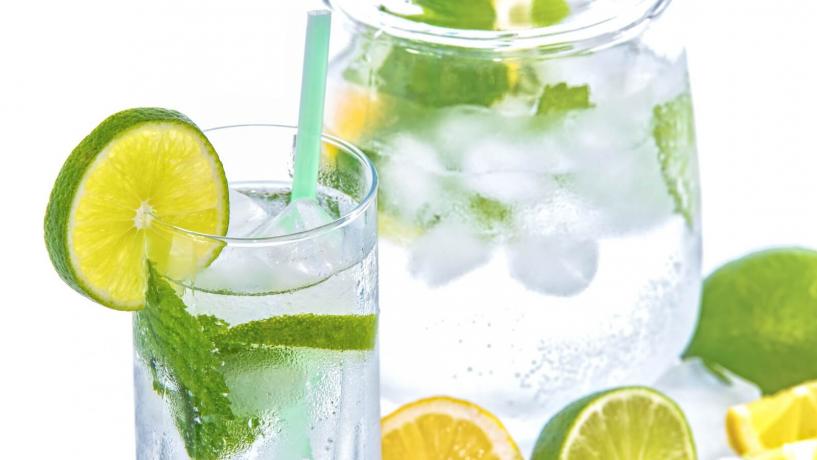
Despite the acidity of lemons and limes (bacteria grow best in neutral acidity environments), bacteria can easily be transferred from one place to another on slices of these fruits.

In an [experiment conducted by Canadian researchers](https://theconversation.com/just-in-time-for-your-tailgate-how-getting-a-drink-can-be-dirty-business-83073) it was found that when bartenders' hands were contaminated with e.Coli, the pathogen was transferred to wet lemons 100% of the time, and to dry lemons 30% of the time.

## Raw Eggs

Raw eggs have caused some of the biggest food-borne illness outbreaks in Australia, one of the worst being an incident in 2013 where a person died and [200 fell ill with salmonella poisoning](http://www.couriermail.com.au/news/queensland/company-fined-over-salmonella-outbreak-on-melbourne-cup-day/news-story/7cb5c90175ab7d837d57aa55b291025a) after eating raw egg mayonnaise from a Brisbane caterer.

Yet raw eggs are still often used in drinks such as sours and smoothies. The only way to ensure that eggs are safe to eat is to cook them through (yolks should be hard) which means that drinks that contain raw eggs are a very high-risk food.

## Fruit

Who doesn't love a fresh fruit smoothie or a cocktail made out of fresh fruit? However, fruit in drinks can also cause food poisoning. Bacteria can easily be transferred from knives and cutting boards onto the fruit. Unwashed fruit can harbour bacteria. And cutting into fruit that has a skin, such as rockmelons, can transfer bacteria from the outside to the inside of the fruit.

Be especially careful with fruits that are low acidity such as melons and berries as these provide a suitable environment for bacteria to grow.

## Milk

A glass of pasteurised milk straight out of the fridge is unlikely to do much harm (provided it's within the expiry date) but cocktails made with a dash of milk need to be treated with caution. Milk that's been out of the refrigerator for more than 2 hours in total should be discarded as bacteria could have reached dangerous levels.

Look out for bartenders who leave milk on the side of the bar and don't refrigerate it immediately as it could easily reach the 2-hour limit within the time it takes to make a handful of cocktails.

| **Ingredient** | **Risk** |
| --- | --- |
| Ice | Can carry bacteria or fungi - 67-83% of restaurant ice samples tested positive in US studies |
| Lemon and lime | Bacteria transfers from hands to wet citrus 100% of the time |
| Raw eggs | High salmonella risk - used in sours and smoothies despite being uncooked |
| Fruit | Unwashed or cut fruit can transfer bacteria, especially low-acid varieties like melon and berries |
| Milk | Discard if left unrefrigerated for more than 2 hours |

## Does Alcohol Kill Pathogens?

Many people believe that alcohol in drinks kills off pathogens but that's been found to be incorrect. In fact, one experiment found that pathogens in frozen ice weren't killed off even when dissolved in 80-86 proof mixtures of Scotch and soda or tequila.

As with all food safety hazards, it's best to apply common sense when ordering or preparing drinks containing the above ingredients. With a little mindfulness and some good sanitation, the threat can be easily alleviated. And always remember the golden rule of food safety - when in doubt, throw it out!


![For Students](https://blog.foodsafety.com.au/hubfs/afs/menu/accounts1.jpg)

## For Students

Taking an AIFS course? If you are enrolled in a course, log in here to:

- start the course or continue your progress
- complete your final submission
- check your assessment status

[Student Login](https://my.foodsafety.com.au/customer/account/login/)

![For Business](https://blog.foodsafety.com.au/hubfs/afs/menu/accounts2.jpg)

## For Business

If you have a Business Account with us, log in here to:

- enrol your staff in a food safety course
- access reports and invoices
- view your order history

[Business Login](https://my.foodsafety.com.au/customer/account/login/)

![For Members](https://blog.foodsafety.com.au/hubfs/afs/menu/accounts4.jpg)

## For Members

Members get unlimited access to our Resource Library. Log in here to:

- access 'how-to' guides and videos
- download custom forms, fact sheets and checklists
- search our food recall feed

[Member Login](https://resources.foodsafety.com.au/user/login)

Cancel

Need help? [Contact us](https://www.foodsafety.com.au/contact)

```json
{
  "@context" : "https://schema.org",
  "@type" : "BlogPosting",
  "author" : {
    "@type" : "Person",
    "name" : "Bethany Gibson",
    "url" : "https://blog.foodsafety.com.au/author/bethany-gibson"
  },
  "dateModified" : "2026-05-01T15:12:15.650Z",
  "datePublished" : "2018-01-27T05:00:00.000Z",
  "headline" : "Could Your Favourite Drinks Be Food Safety Hazards?",
  "image" : [ "https://blog.foodsafety.com.au/hubfs/Imported_Blog_Media/Dangerous-Drinks-Is-Your-Favourite-Drink-a-Food-Safety-Hazard-2.jpg" ],
  "mainEntityOfPage" : {
    "@id" : "https://blog.foodsafety.com.au/drinks-food-safety-hazard",
    "@type" : "WebPage"
  },
  "publisher" : {
    "@type" : "Organization",
    "logo" : {
      "@type" : "ImageObject",
      "url" : "https://blog.foodsafety.com.au/hubfs/afs/logos/afs-logo-horizontal-stack-green.svg"
    },
    "name" : "Moncel"
  }
}
```