.jpg?width=820&height=462&name=Depositphotos_152685448_XL%20(1).jpg)
Australia has one of the highest childhood food allergy rates in the world with around 10% of infants and up to 8% of children affected. For childcare professionals managing groups of young children each day, those numbers are not background statistics - they are a daily reality.
It is important to note that food allergies are distinct from food-borne illness. Rather than being caused by bacteria or other pathogens, allergic reactions occur when the immune system responds to specific proteins found in certain foods. The distinction matters because the prevention and response strategies are different - and so are the consequences.
At their most serious, allergic reactions can cause anaphylaxis, a potentially life-threatening emergency that can escalate within minutes of exposure.
For childcare teams, understanding which allergens pose the greatest risk, how to prevent exposure and how to respond when a reaction occurs are some of the most important competencies you can develop.
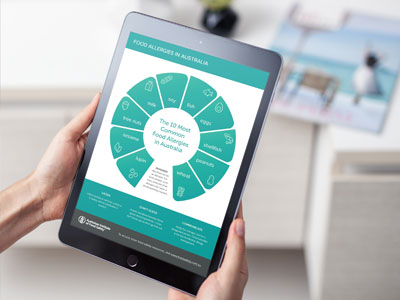
10 most common food allergens in children
Australian food safety standards require mandatory allergen declarations for ten priority foods. These allergens are commonly associated with serious reactions in children:
-
- Eggs
- Cow's milk (dairy)
- Peanuts
- Tree nuts (including cashews, almonds, walnuts and pistachios)
- Wheat
- Soybeans
- Sesame
- Fish
- Shellfish (including prawns, lobster and crab)
- Lupin
Reactions can be triggered by trace amounts of any of these allergens. Cross-contact through shared utensils, unclean preparation surfaces or unwashed hands are among the most common causes of accidental allergen exposure in food service settings, including childcare centres.
Recognising the signs of an allergic reaction
Speed of recognition is critical. Reactions can begin within minutes of allergen exposure and may progress rapidly from mild symptoms to a medical emergency.
Mild to moderate symptoms include:
- Hives, redness or welts on the skin
- Swelling of the lips, face or eyes
- Stomach pain, vomiting or diarrhoea
- Tingling or itching in or around the mouth
Signs of anaphylaxis include:
- Difficulty breathing or noisy breathing
- Swelling of the tongue or throat
- Persistent dizziness or loss of consciousness
- A pale, floppy appearance in young children
If anaphylaxis is suspected, administer an adrenaline auto-injector (EpiPen) immediately and call 000. Do not wait to see whether symptoms resolve on their own.
Why childcare settings carry a heightened risk of allergic reactions
Young children present unique food allergen management challenges. Children under five are among the most at-risk groups for severe allergic reactions - and many cannot reliably communicate their symptoms or identify foods that may harm them.
Group mealtimes create multiple opportunities for cross-contact: shared plates, communal food and the unpredictable behaviour of young children at the table. High staff turnover, casual workers unfamiliar with individual children's needs and the sheer volume of children in care all compound the risk.
A childcare environment without robust food allergen management procedures is not just non-compliant. It puts children at risk.
Practical steps to prevent allergic reactions in your childcare centre
Prevention requires both strong procedures and a well-trained team. Key focus areas include:
1. Maintain clear, accessible allergy records
Every child's allergies and dietary requirements should be documented and accessible to all staff - including relief and casual workers. Laminated allergy summaries displayed in the kitchen and at mealtimes are a simple, effective safeguard.
2. Checking labels every time
Formulations change without notice. Even products your kitchen has used for months should be checked at every purchase. Pay close attention to "may contain" statements as well as direct ingredient listings.
3. Controlling cross-contact at every stage
Use dedicated preparation equipment such as separate boards, utensils and serving spoons for allergen-free meals. Clean and sanitise preparation surfaces thoroughly between tasks. Staff should wash hands before handling allergen-free food and after contact with any allergen.
4. Keeping communication open with families
A child's allergy status can change. Build allergen check-ins into your enrolment process and make it easy for families to update records at any time.
5. Having an anaphylaxis management plan ready
Each child with a known severe allergy should have an individual anaphylaxis management plan, prepared in consultation with their medical team. All staff (not just room leaders) should know where EpiPens are stored and how to use them.
Your obligations under food safety law
Childcare centres that handle, prepare or serve food are required to comply with Food Standards Australia New Zealand (FSANZ) Standard 3.2.2A. Under this legislation, services must demonstrate to health inspectors that:
- At least one certified Food Safety Supervisor has been appointed
- All staff who handle potentially hazardous food have completed suitable food safety training
- The facility maintains up-to-date records of safe food practices
Failing to meet these requirements can result in fines, reputational damage or, in serious cases, a direction to close. Getting the right training in place is the most straightforward path to compliance.
Training your team to manage food allergen risks with confidence
Awareness is the starting point. What makes the real difference is staff who are trained to act quickly and correctly when a reaction occurs - and who understand their role in preventing one from happening at all.
The Australian Institute of Food Safety (AIFS) offers online training to help childcare teams meet their legal obligations and manage food allergen risk confidently:
Required for supervisory staff under Food Standards Australia New Zealand (FSANZ) Standard 3.2.2A. Covers food safety laws, hazard identification and the practical skills needed to manage food safety compliance in a childcare setting.
Covers food safety fundamentals - including allergen awareness - as required for all staff who handle food.
Food Allergen Management Course
Focused training on identifying food allergens, preventing cross-contact and responding correctly when a reaction occurs.
All courses are online and self-paced, with 12 months' access from enrolment. Group enrolments and account management support are available for childcare services training multiple staff through an AIFS Business Account.
Ready to enrol?
AIFS has partnered with Early Learning Australia (ELA) to promote online access to vital food safety training. Enrol online now to receive an exclusive ELA discount on AIFS courses.
Frequently Asked Questions
Q. Which AIFS food safety courses recognised across all Australian states and territories?
A. The Food Safety Supervisor and Food Handler courses delivered by AIFS are nationally recognised and accepted across all states and territories in Australia.
Q. How long does food safety training take to complete?
A. Both the Food Handler and Food Safety Supervisor courses are self-paced and can typically be completed within a day. You have up to 12 months' access if you need to spread learning across a longer timeframe.
Q. Does every childcare worker need food safety training?
A. Under FSANZ Standard 3.2.2A, all staff who handle potentially hazardous food must complete Food Handler training.
In addition, At least one member of staff responsible for overseeing food safety in the facility must hold a current valid Food Safety Supervisor certification.
Q. Can you enrol multiple staff members at the same time?
A. Yes. AIFS supports group enrolments with dedicated account management for childcare services. Contact us to discuss group pricing and setup.